
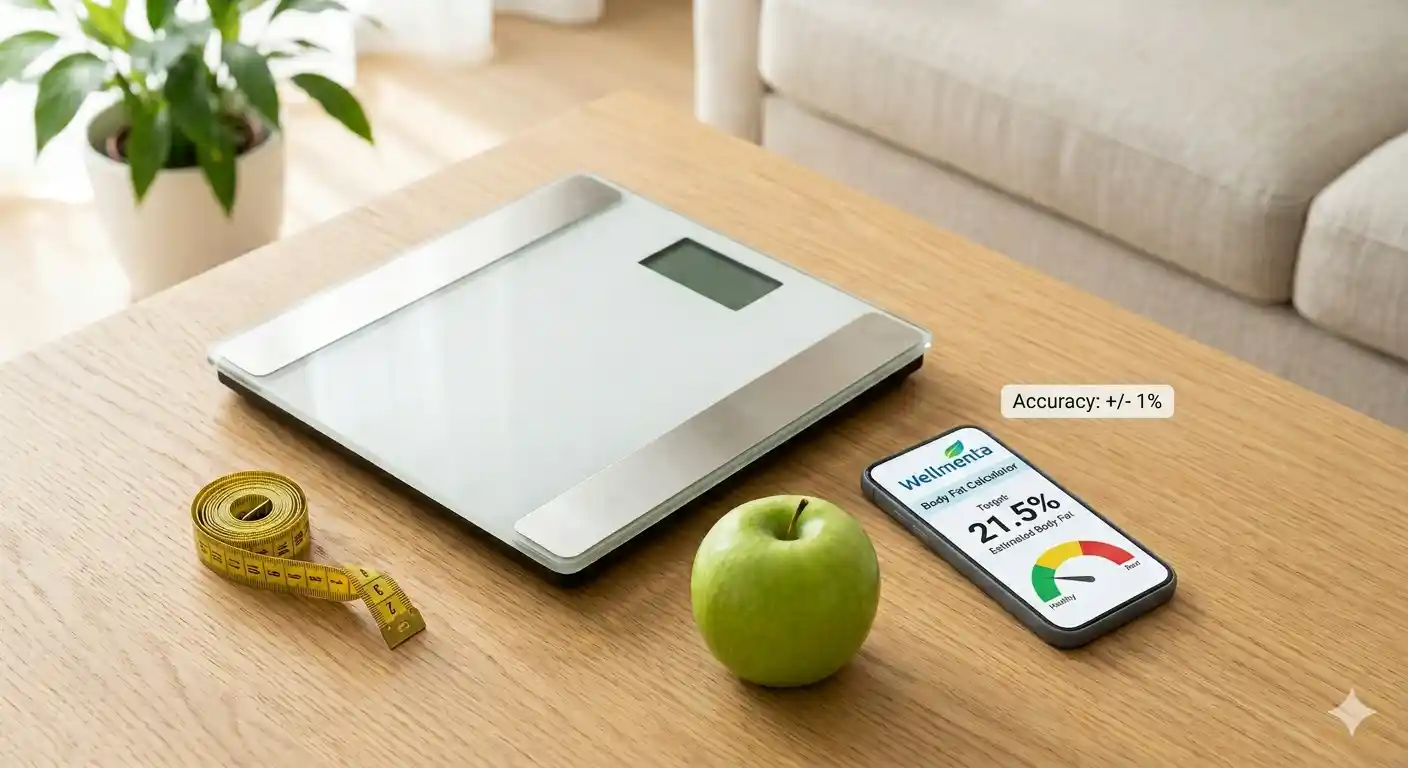
Body Fat Calculator
Estimate your body fat percentage using the U.S. Navy Method measurements.
Understanding Body Fat Percentage and Body Composition
While total body weight is a common metric for tracking health, it fails to distinguish between muscle, bone, and fat. Body Fat Percentage is a much more accurate indicator of physical fitness and health risks. It represents the total mass of fat divided by total body mass, multiplied by 100.
The U.S. Navy Method Explained
Our calculator utilizes the U.S. Navy Method, a widely respected formula developed by the Naval Health Research Center. This method provides an accessible way to estimate body fat without expensive equipment like Hydrostatic Weighing or DXA scans. By using specific circumference measurements—neck, waist, and (for women) hips—the formula predicts body density with a high degree of correlation to clinical methods.
Why Body Fat Matters More Than BMI
The Body Mass Index (BMI) often misclassifies muscular individuals as "overweight." Because muscle is significantly denser than fat, an athlete may have a high BMI but a low, healthy body fat percentage. Tracking your body fat allows you to focus on Body Recomposition: losing fat while maintaining or gaining lean muscle mass.
Essential vs. Storage Fat: What is Healthy?
Fat is not inherently bad; it is an essential component of the human body. However, understanding the difference between essential fat and storage fat is critical for long-term health.
Essential Fat
This is the minimum amount of fat required for physiological and reproductive functions.
- Men: Typically 2–5% essential fat.
- Women: Typically 10–13% essential fat (due to hormonal and reproductive demands).
Storage Fat
This consists of fat that accumulates in adipose tissue, located under the skin (subcutaneous fat) or around internal organs (visceral fat). While storage fat provides energy and protects organs, an excess—especially visceral fat—is linked to metabolic syndromes and heart disease.
How to Measure Accurately for Best Results
To get the most out of the WellMenta Body Fat Calculator, precision in measurement is key. Use a non-elastic measuring tape and follow these guidelines:
For Everyone
- Height: Measure without shoes, standing flat against a wall.
- Neck: Measure just below the larynx (Adam's apple), with the tape sloping slightly downward to the front. Avoid tensing your neck muscles.
- Waist: Men should measure at the navel level. Women should measure at the narrowest point of the natural waistline (usually halfway between the belly button and the lower ribs).
Specifically for Women
- Hips: Measure at the widest point of the buttocks. This is a critical measurement for the female calculation because it accounts for lower-body fat distribution, which differs biologically from men.
Improving Your Body Composition
If your results are higher than your goal range, focus on sustainable lifestyle changes rather than "crash diets."
The Power of Resistance Training
Lifting weights or performing bodyweight exercises signals your body to preserve lean tissue. When you are in a caloric deficit (which you can calculate using our TDEE Tool), resistance training ensures the weight you lose comes from fat stores rather than muscle.
Nutritional Priority: Protein
Consuming adequate protein (roughly 1.6g to 2.2g per kg of body weight) supports muscle repair and has a high thermic effect, helping you burn more calories during digestion and maintain your metabolic rate.
Frequently Asked Questions (FAQ)
The U.S. Navy circumference method is highly regarded for its cost-free convenience and provides a general tracking accuracy within roughly 3% to 4% of a true laboratory reading. While clinical diagnostic tools like a DEXA scan offer closer precision, the Navy tape test relies on body geometry rather than expensive equipment, making it a reliable benchmark for tracking standard body composition changes at home.
To ensure calculation accuracy, use a flexible, non-elastic measuring tape directly against the skin. Keep your head straight and measure the neck just below the larynx, angling the tape slightly downward at the front. For the torso, men must measure horizontally at the navel level after a normal exhalation. Women must measure the waist at the narrowest point and include a hip measurement taken around the widest portion of the gluteals.
The algebraic algorithm uses different equations based on biological sex because men and women store body fat differently. The formula for men requires three distinct metric or imperial values: total height, neck circumference, and abdomen circumference. The formula for women requires four values: total height, neck circumference, waist circumference, and hip circumference.
The Navy method uses neck circumference as a proxy for lean muscle tissue, allowing it to differentiate between fat and muscle mass far better than a standard BMI calculator. However, if an athlete has an exceptionally developed core or bloated abdominal wall, the formula may slightly overestimate their true fat percentage. In cases of elite muscle mass, advanced air displacement plethysmography (such as a Bod Pod) or a DEXA scan remains the absolute standard.
The Department of Defense enforces strict body composition assessment (BCA) standards that scale by age and biological sex. For example, within the U.S. Navy, the maximum allowable body fat limits range from 22% to 26% for males and 33% to 36% for females depending on their age bracket. Service members who exceed these structural boundaries are required to enter physical fitness improvement programs.
Medical Disclaimer: The WellMenta Body Fat Calculator provides an estimate. It is not a diagnostic tool. Consult with a medical professional or certified fitness expert before beginning a new diet or exercise regimen.