
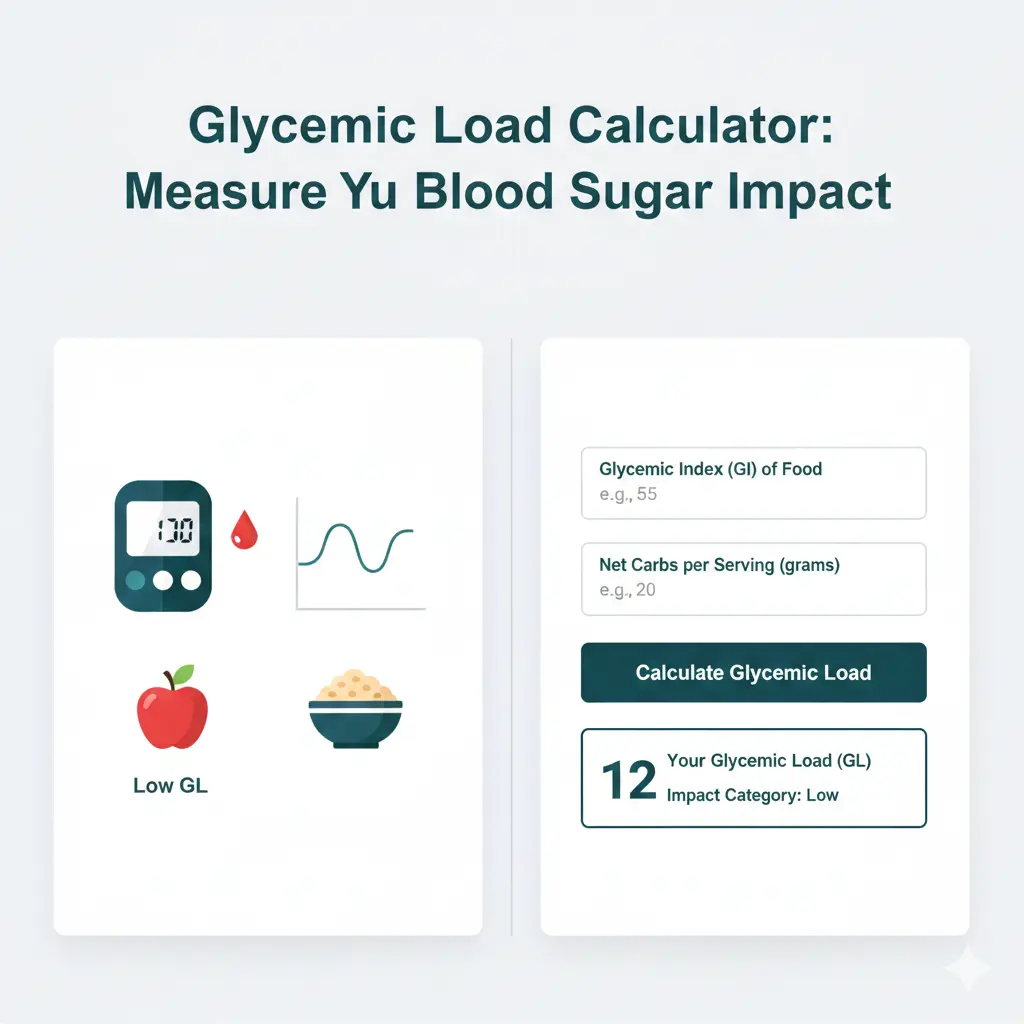
Glycemic Load Calculator
Understand the real impact of your food on your blood sugar levels.
Glycemic Index vs. Glycemic Load
The Smart Carb Guide: Why Glycemic Load is the Ultimate Metric
For years, health enthusiasts have looked at the Glycemic Index (GI) to determine if a food is "healthy." However, GI only tells half the story. To truly understand how your lunch will affect your energy levels, focus, and fat storage, you need to use a Glycemic Load Calculator.
What is Glycemic Load (GL)?
The Glycemic Index ranks carbohydrates on a scale of 0 to 100 based on how quickly they raise blood sugar. But here is the problem: GI is measured based on a fixed amount of carbs (50 grams), which isn't always a realistic serving size.
Glycemic Load (GL) fixes this. It factors in the GI value AND the portion size. For example, watermelon has a high GI, but because it is mostly water, its Glycemic Load per serving is actually very low. Our blood sugar tool helps you identify these nuances so you can eat the foods you love without the insulin spikes.
How to Interpret Your GL Results
When you use our glycemic load calculator, the results are categorized into three levels based on clinical nutrition standards:
- Low GL (10 or less): These foods cause a slow, steady rise in blood sugar. They are excellent for sustained energy and weight management.
- Medium GL (11–19): These have a moderate impact on your blood glucose.
- High GL (20 or more): These foods cause a rapid spike in blood sugar and insulin. Frequent consumption of high GL foods is linked to insulin resistance and increased fat storage.
The Benefits of Tracking Your Insulin Response
By utilizing a carb quality tracker, you are doing more than just counting calories. You are managing your hormones. A low-glycemic lifestyle has been shown to:
- Reduce Hunger: Avoiding blood sugar crashes prevents the "hangry" feeling two hours after a meal.
- Improve Mental Clarity: Stable blood sugar means a stable supply of fuel for the brain, eliminating the afternoon slump.
- Support Heart Health: Lower insulin levels are associated with better cholesterol profiles and lower blood pressure.
FAQ: Carbohydrates and Blood Sugar
Glycemic Index (GI) scales carbohydrates from 0 to 100 based on how rapidly they spike blood glucose compared to pure glucose. Glycemic Load (GL) builds on this by factoring in the actual amount of carbohydrates in a typical serving. Because it calculates real-world portion sizes, GL offers a much more accurate prediction of a food's true impact on your blood sugar.
To calculate the Glycemic Load of a specific food item, multiply its Glycemic Index rating by the total number of net carbohydrates (total carbohydrates minus fiber) in grams per serving, then divide the result by 100:
GL = (Glycemic Index x Net Carbs (g)) / 100
An online GL calculator automates this algebraic equation instantly across multiple food groups to estimate your cumulative dietary impact.
What are the standard low, medium, and high Glycemic Load ranges? When tracking individual food portions, Glycemic Load scores are universally classified into three primary metabolic tiers:
Low GL: A score of 10 or less (minimal impact on blood glucose).
Medium GL: A score ranging from 11 to 19 (moderate impact on blood glucose).
High GL: A score of 20 or higher (can trigger a rapid blood sugar spike and subsequent crash).
Watermelon is the classic example of this nutritional paradox. It possesses a very high Glycemic Index (around 72) because its sugars break down rapidly. However, because watermelon is primarily made of water and contains very few total carbohydrates per serving, its actual Glycemic Load is exceptionally low (around 4). This means eating a normal slice will not cause a drastic blood sugar spike.
Managing dietary Glycemic Load is a highly searched tactic for individuals tracking insulin sensitivity, prediabetes, or Type 2 diabetes. By building meals centered around low-GL foods, you can prevent extreme blood glucose spikes, minimize insulin demand, reduce systemic inflammation, and sustain consistent, all-day energy levels without the typical midday fatigue.
Master Your Metabolism
Your blood sugar levels dictate your mood, your energy, and your body composition. By switching your focus from simple carb counting to monitoring your Glycemic Load, you are taking a sophisticated approach to your health.
Use this calculator to audit your favorite meals, find better alternatives, and finally achieve the stable energy you deserve.