
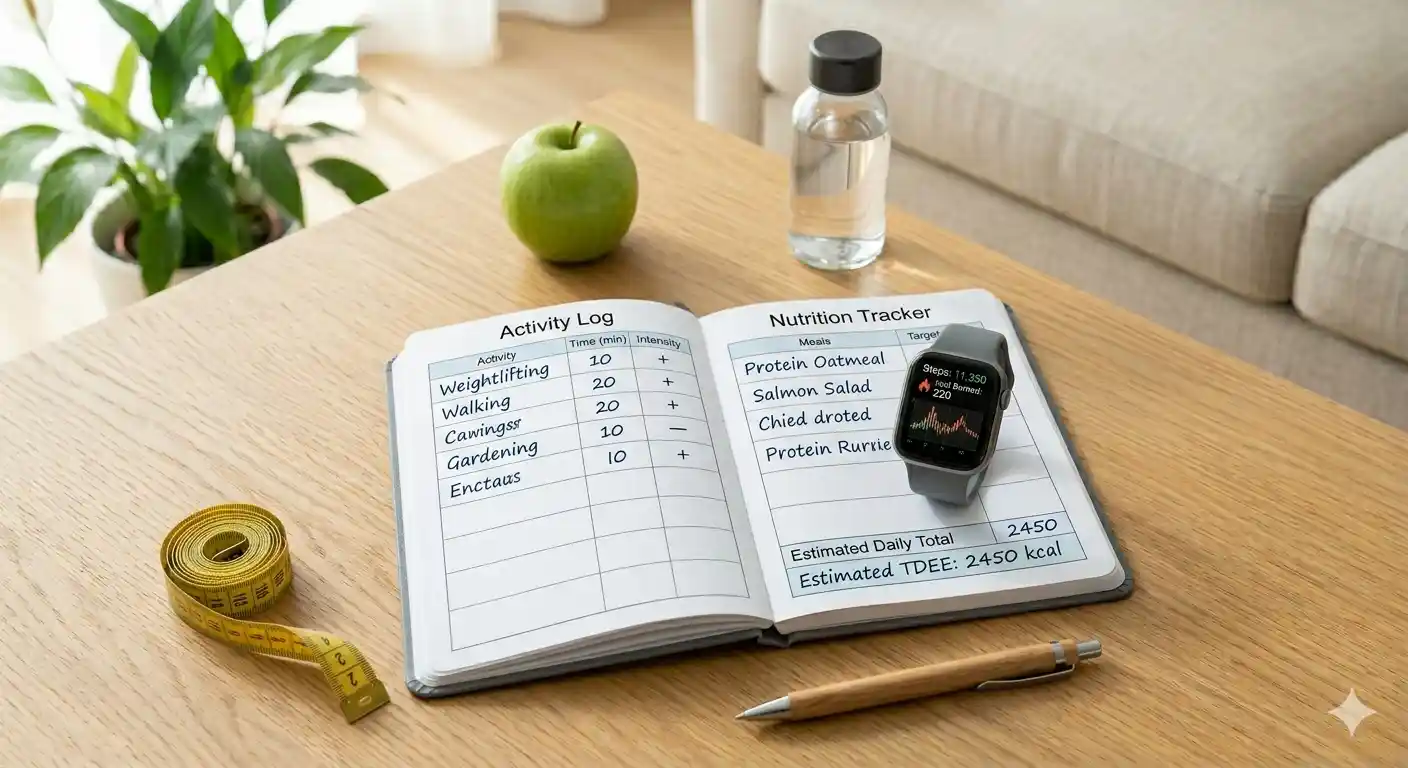
TDEE Calculator
Calculate your Total Daily Energy Expenditure to master your health goals.
Understanding Your TDEE: The Science of Daily Energy Expenditure
Achieving your fitness goals—whether it is shedding body fat, building lean muscle mass, or maintaining your current physique—starts with one critical number: your Total Daily Energy Expenditure (TDEE). While many people focus solely on calories eaten, understanding calories burned is the other half of the metabolic equation.
What is TDEE and Why Does It Matter?
TDEE represents the total number of calories your body burns in a 24-hour period. It is not just the energy you spend at the gym; it includes everything from breathing and digestion to walking to your car. By calculating your TDEE, you establish a “baseline.”
- To Lose Weight: You must consume fewer calories than your TDEE (Caloric Deficit).
- To Gain Weight: You must consume more calories than your TDEE (Caloric Surplus).
- To Maintain Weight: You must consume calories equal to your TDEE.
The Four Components of Metabolism
Your TDEE is not a static number; it is the sum of four distinct metabolic processes:
- Basal Metabolic Rate (BMR): This is the energy your body requires to keep your organs functioning while at total rest. It typically accounts for 60-70% of your TDEE.
- Thermic Effect of Food (TEF): The energy used to chew, digest, and process the nutrients you eat. Protein has a higher TEF than fats or carbohydrates.
- Thermic Effect of Activity (TEA): The calories burned during intentional exercise, such as weightlifting, running, or cycling.
- Non-Exercise Activity Thermogenesis (NEAT): The energy expended for everything we do that is not sleeping, eating, or sports-like exercise. This includes fidgeting, walking through the office, and standing.
The Science Behind the Calculator: The Mifflin-St Jeor Formula
At WellMenta, our calculator utilizes the Mifflin-St Jeor Equation, which is currently regarded by the Academy of Nutrition and Dietetics as the most reliable standard for predicting metabolic rate in healthy individuals.
The formula calculates your BMR first:
The Mifflin-St Jeor Equations
Men: 10 × weight (kg) + 6.25 × height (cm) – 5 × age (y) + 5
Women: 10 × weight (kg) + 6.25 × height (cm) – 5 × age (y) – 161
Once your BMR is established, we apply an Activity Multiplier (the Katch-McArdle or Harris-Benedict logic) to account for your lifestyle intensity, resulting in your final TDEE.
How to Choose the Correct Activity Level
One of the most common mistakes in calorie tracking is overestimating activity levels. To get the most accurate result from the WellMenta calculator, use these guidelines:
- Sedentary: You work a desk job and do very little intentional exercise.
- Lightly Active: You have a desk job but engage in light exercise or sports 1–3 days a week.
- Moderately Active: You are on your feet during the day or perform moderate exercise 3–5 days a week.
- Very Active: You have a physically demanding job or engage in heavy exercise 6–7 days a week.
From Data to Results: How to Use Your TDEE
Once you have your TDEE result, you can tailor your nutrition plan with precision.
For Sustainable Weight Loss
A safe and sustainable approach is the “20% Rule.” Subtract 20% from your TDEE (roughly a 500-calorie deficit for most). This allows for fat loss while preserving muscle tissue and hormonal health.
For Muscle Growth (Bulking)
To build muscle efficiently while minimizing fat gain, aim for a small surplus of 5-10% above your maintenance calories. Ensure you are consuming adequate protein (typically 1.6g to 2.2g per kg of body weight) to support protein synthesis.
Frequently Asked Questions (FAQ)
Total Daily Energy Expenditure (TDEE) is the total number of calories your body burns in a single 24-hour day. An online TDEE calculator determines this metric by first establishing your Basal Metabolic Rate (BMR)—the energy required to keep your vital organs functioning at rest—and then multiplying that number by an activity multiplier based on your weekly exercise routine.
Your Basal Metabolic Rate (BMR) represents the absolute baseline calories your body requires just to stay alive in a comatose state without any movement. Your TDEE builds directly upon your BMR by accounting for all daily physical movement, including structured gym workouts, walking, working, digesting food, and general daily chores.
How many calories should I eat to lose weight or build muscle? To manipulate your body composition, you must adjust your daily caloric intake relative to your calculated maintenance calories:
For Weight Loss: You must create a healthy caloric deficit, typically by consuming 300 to 500 calories below your TDEE, forcing your body to burn stored fat for fuel.
For Muscle Growth: You must create a caloric surplus, generally by consuming 200 to 500 calories above your TDEE while engaging in progressive resistance training to support muscle protein synthesis.
Activity multipliers provide an excellent baseline estimation, but human tracking error makes them the most common point of calculation inaccuracy. Many people accidentally overestimate their true activity level—such as selecting “Highly Active” based on a desk job with three weekly workouts. For the most reliable weight management results, it is best to choose a conservative activity setting and track your real-world weight trends over 14 to 21 days.
If your scale weight remains completely stalled over several consecutive weeks, it indicates that your actual energy intake matches your real-world energy expenditure. This discrepancy typically happens because metabolic adaptation has naturally lowered your true baseline maintenance calories, or because hidden oils, liquid calories, and unweighed food portions are leading to unintentional underreporting of your daily caloric intake.
Medical Disclaimer: The results provided by the WellMenta TDEE Calculator are estimates for educational purposes. Consult with a healthcare professional or registered dietitian before making significant changes to your diet or exercise routine, especially if you have underlying health conditions.